
Debunking the Biggest Myth: Is Ayurveda Just Home Remedies Without Scientific Testing? By Dr. Jigar Gor, Ayurvedic Physician, Bhuj.

If you’ve ever mentioned visiting an Ayurvedic doctor to someone, chances are you’ve heard responses like: “Oh, so you’re just trying home remedies?” or “But is there any real testing in Ayurveda?” I encounter this misconception almost daily at my clinic in Bhuj. Patients often arrive surprised when I conduct detailed examinations, ask for their medical reports, or spend considerable time understanding their complete health history. “I thought you’d just give me some herbal medicine,” they say.
This widespread myth—that Ayurveda is merely a collection of kitchen remedies passed down through generations—does a great disservice to a medical science that has evolved over 5,000 years with systematic diagnostic methods, documented case studies, and personalized treatment protocols.
Let me take you beyond this myth and show you what Ayurveda truly is.
The Myth That Refuses to Die
The Common Misconception: “Ayurveda is just turmeric milk, herbal teas, and grandmother’s remedies. There’s no proper diagnosis, no testing, no science—just trial and error with herbs.”
I understand where this comes from. Social media is flooded with “Ayurvedic remedies” for everything from weight loss to glowing skin. WhatsApp forwards promise miracle cures with simple kitchen ingredients. While some of these may have merit, they’ve created a dangerously oversimplified picture of what Ayurveda actually is.
The Truth: Ayurveda is a complete, structured medical system with sophisticated diagnostic techniques, systematic examination procedures, and evidence-based treatment protocols. It’s not about randomly trying herbs—it’s about understanding your unique constitution (Prakriti), identifying the root cause of disease (Samprapti), and creating personalized treatment plans.
What Actually Happens in an Ayurvedic Consultation?
When you visit an experienced Ayurvedic doctor in Bhuj or anywhere else, you’re not just getting a casual chat and a bottle of herbs. Here’s what a proper Ayurvedic diagnosis involves:
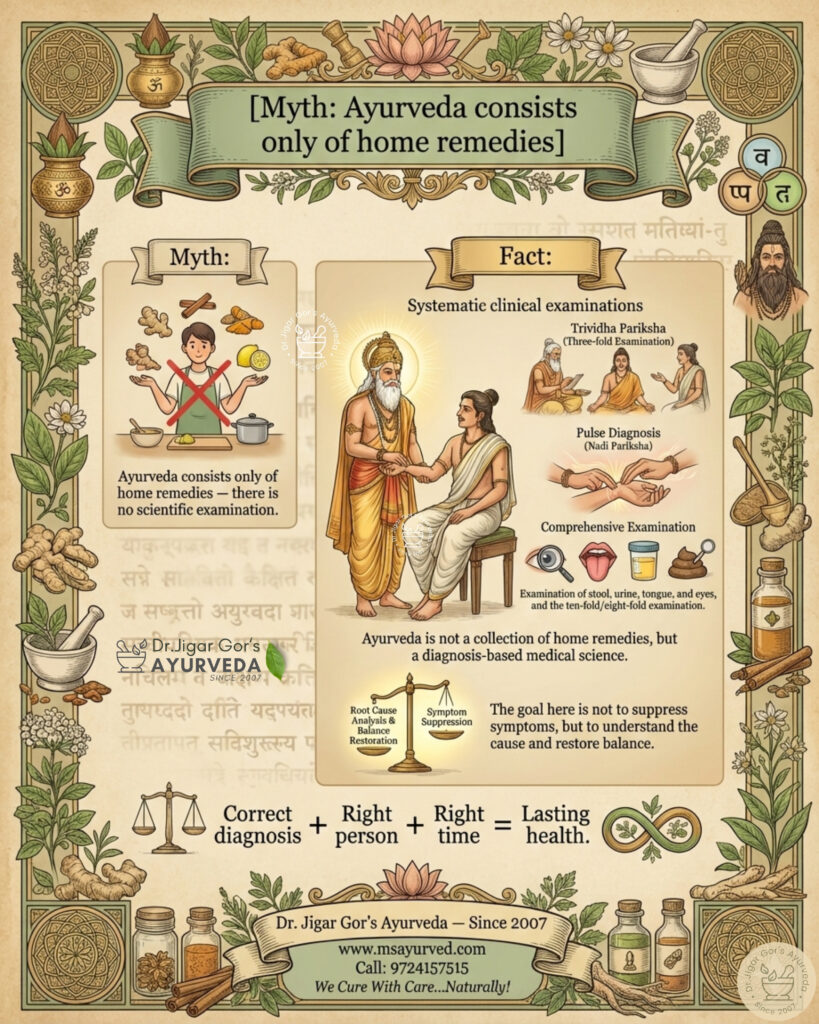
1. Trividha Pariksha (Three-Fold Examination)
This foundational diagnostic approach includes:
- Darshana (Observation): I carefully observe your physical appearance, body structure, skin tone, posture, gait, and even how you communicate. Your tongue coating, eye clarity, nail condition—everything tells a story.
- Sparshana (Palpation): This includes the famous Nadi Pariksha (pulse examination) but also palpating the abdomen, checking skin temperature, and feeling for any abnormal masses or tenderness.
- Prashna (Interrogation): This isn’t just “Where does it hurt?” I ask about your daily routine, sleep patterns, digestion, emotional state, family history, dietary habits, and how your symptoms vary throughout the day and seasons.
2. Ashtavidha Pariksha (Eight-Fold Examination)
For complex or chronic conditions, we conduct a more detailed examination:
- Nadi (Pulse): Not just heart rate, but the quality, rhythm, and character of pulse at different depths, revealing your Dosha balance and Agni (digestive fire) status
- Mutra (Urine): Color, frequency, smell, and associated sensations
- Mala (Stool): Consistency, frequency, completeness of elimination
- Jihva (Tongue): Coating, color, cracks, mobility
- Shabda (Speech and Sound): Voice quality, breathing sounds
- Sparsha (Touch/Skin): Temperature, texture, moisture, sensitivity
- Drik (Eyes): Clarity, redness, discharge, luster
- Akriti (General Appearance): Overall build, nourishment level, vitality
3. Dashavidha Pariksha (Ten-Fold Examination)
For even deeper analysis, classical texts describe examining ten aspects including your constitution, pathological state, tissue quality, body build, measurements, adaptability, mental capacity, digestive power, exercise capacity, and age.
Does this sound like guesswork to you?
At my clinic in Bhuj, I’ve examined patients where their modern medical reports showed “everything normal,” yet they suffered from chronic fatigue, digestive issues, or recurring infections. Through systematic Ayurvedic examination, we identified imbalances that standard tests don’t measure—like compromised Agni (digestive fire), Ama (toxin) accumulation, or Vata-Pitta imbalances affecting specific tissues.
The Science Behind Ayurvedic Diagnosis
Understanding Samprapti (Pathogenesis)
Unlike symptomatic treatment, Ayurvedic diagnosis focuses on understanding how your disease developed. This is called Samprapti—the complete pathway from health to disease.
For example, when someone comes to me with chronic acidity:
- I don’t just prescribe cooling herbs
- I investigate: When does it worsen? What’s your stress level? How’s your sleep? What’s your meal timing? Do you have constipation?
- I trace back: This might have started with irregular eating → weakened Agni → undigested food → Ama formation → aggravated Pitta → inflammation in stomach lining
By understanding this chain, we don’t just suppress acid—we restore your digestive fire, eliminate toxins, regulate meal timing, and address the root cause.
Prakriti Analysis (Constitutional Assessment)
One of Ayurveda’s greatest strengths is recognizing that we’re all different. A treatment that works beautifully for one person might be ineffective or even harmful for another.
Through detailed examination, an Ayurvedic doctor determines your:
- Prakriti (Birth Constitution): Your natural, healthy state—whether you’re predominantly Vata, Pitta, Kapha, or a combination
- Vikriti (Current Imbalance): How you’ve deviated from your natural state
- Agni Status: Your digestive and metabolic capacity
- Dhatu Status: The quality of your tissues
This is why the same “home remedy” doesn’t work for everyone. That turmeric milk? Excellent for some, but potentially aggravating for pure Pitta types who are already running hot. An experienced Bhuj Ayurvedic doctor like myself knows these nuances.
You can do Prakriti Analysis here : https://pa.msayurved.com/
Ayurveda and Modern Medical Testing: Partners, Not Rivals
Here’s another myth I’d like to address: “Ayurvedic doctors avoid modern tests.”
Absolutely not true.
In my practice, I regularly review and utilize:
- Complete blood counts
- Thyroid function tests
- Blood sugar and HbA1c levels
- Lipid profiles
- Liver and kidney function tests
- Ultrasound, X-ray, and MRI reports when needed
- Hormone panels
The difference? I interpret these results through an Ayurvedic lens to identify not just what is wrong, but why it went wrong.
For instance:
- High cholesterol → I look for compromised Agni, Meda Dhatu vitiation, and Kapha-Vata imbalance
- Thyroid dysfunction → I examine the connection to Agni, examine throat chakra health, and assess Kapha-Vata balance in metabolism
- Diabetes → I investigate Ojas depletion, Kapha-Pitta relationship, and Meda-Mamsa Dhatu interaction
This integrated approach gives patients the best of both worlds: modern diagnostic clarity with Ayurvedic therapeutic depth.
So Where Do Home Remedies Fit In?
Home remedies are absolutely part of Ayurveda—but they’re supportive care, not primary treatment for serious conditions.
Think of it this way: If your house has a structural problem with the foundation, you wouldn’t just repaint the walls and call it fixed, right? Similarly:
When Home Remedies Work Well:
- Minor digestive upset (occasional bloating, mild acidity)
- Seasonal immunity boosting
- General wellness maintenance
- Mild cold or cough
- Skin care and hair care
When You Need Professional Ayurveda Treatment in Bhuj:
- Chronic diseases (diabetes, hypertension, arthritis)
- Autoimmune conditions
- Recurring infections or illnesses
- Women’s health issues (PCOS, irregular periods, fertility)
- Digestive disorders (IBS, chronic constipation, colitis)
- Mental health concerns (anxiety, depression, insomnia)
- When home remedies have been tried without results
- When modern medicine reports are “normal” but symptoms persist
The Danger of Random Remedy-Hopping
I’ve seen patients damage their health by indiscriminately trying every remedy they find online:
- A Vata-dominant person following a harsh detox meant for Kapha types, leading to severe weakness
- Someone with hyperacidity taking hot spices recommended for “digestion”
- Excessive consumption of “cooling” foods causing digestive stagnation
- Using random herbs during pregnancy or with other medications, risking interactions
Ayurveda’s wisdom is not just in knowing remedies—it’s in knowing when, how much, for whom, and in what combination to use them.
This is precisely why you need an experienced Ayurvedic doctor, not just an internet search.
Five Signs You Need Expert Ayurvedic Diagnosis
If you’re experiencing any of these, it’s time to move beyond home remedies:
- Your symptoms keep returning despite treatment or remedies
- You’ve tried multiple home remedies without lasting improvement
- Medical tests show “normal” but you don’t feel well
- You have multiple vague symptoms that don’t fit a clear diagnosis (fatigue, brain fog, digestive issues, mood swings)
- The same remedy works differently for you than for others
These situations require comprehensive Samprapti analysis and personalized treatment—something only qualified Ayurvedic doctors can provide.
What Makes Ayurveda a Complete Medical Science?
1. Prevention-Focused (Swasthavrutta)
Ayurveda emphasizes maintaining health through daily routines (Dinacharya), seasonal routines (Ritucharya), and ethical living (Sadvritta) before disease even occurs.
2. Individualized Treatment (Vyakti-Based)
No two treatment plans are identical because no two people are identical—even with the same disease.
3. Root Cause Resolution (Nidana Parivarjana)
Rather than suppressing symptoms, we identify and eliminate the cause.
4. Multi-Dimensional Approach
Treatment addresses body, mind, and consciousness simultaneously through medicines, diet, lifestyle, Panchakarma, yoga, and meditation.
5. Time-Tested Safety
When administered properly by qualified practitioners, Ayurvedic treatments have minimal side effects and can be used long-term safely.
The Right Approach: Diagnosis + Right Person + Right Time = Lasting Health
At Dr. Jigar Gor’s Ayurveda Clinic in Bhuj, we follow this principle rigorously:
The Right Diagnosis:
- Comprehensive examination using both traditional and modern tools
- Understanding your Prakriti and Vikriti
- Identifying the complete Samprapti of your condition
The Right Person:
- Medicines and therapies specifically suited to your constitution
- Doses adjusted to your Agni and body strength
- Treatment timings aligned with your daily routine
The Right Time:
- Considering seasonal variations (Ritu)
- Time of day (optimal medicine times)
- Disease stage (acute vs. chronic approach)
- Life stage (childhood, pregnancy, old age considerations)
This precision is what transforms Ayurveda from “just trying something” to systematic, effective healing.
My Promise to You
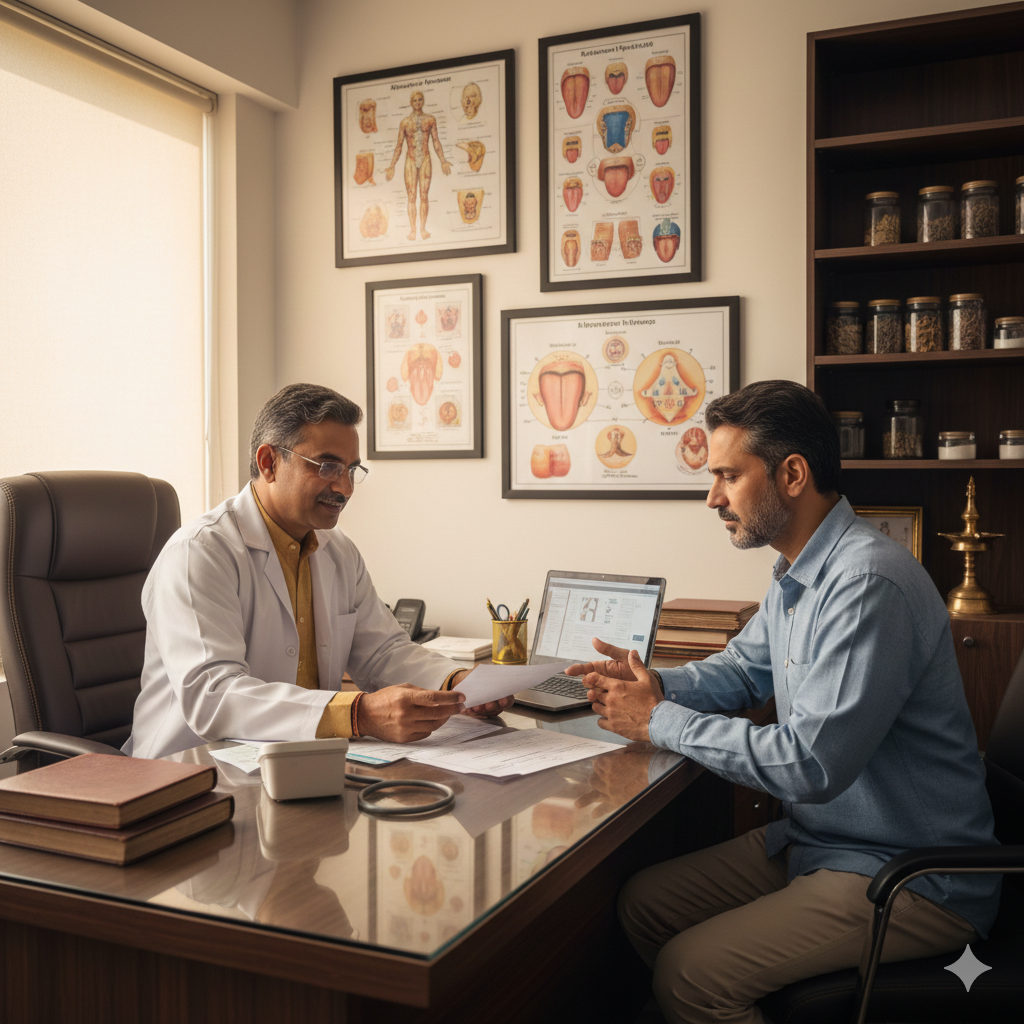
If you walk into my clinic in Bhuj expecting just a quick herbal prescription, you’ll be pleasantly surprised (and possibly a bit overwhelmed at first) by how thoroughly we examine, question, and understand your health.
Because you deserve more than generic advice. You deserve:
- To be heard and understood as a unique individual
- A clear explanation of what’s happening in your body
- A treatment plan that makes sense and shows results
- Guidance on sustainable lifestyle changes
- Follow-up care that adjusts as you heal
This is what real Ayurveda looks like. Not miracle cures or one-size-fits-all remedies, but personalized, systematic, scientific medicine rooted in thousands of years of clinical experience.
Final Thoughts: Beyond the Myth
Ayurveda is not anti-science—it IS science. Ancient science, yes, but science nonetheless. It has:
- Documented diagnostic methods
- Systematic examination procedures
- Recorded case studies spanning millennia
- Logical therapeutic protocols
- Quality control standards for medicine preparation
Home remedies are beautiful, useful tools when applied correctly. But they’re just one small part of a vast medical system designed to maintain health, prevent disease, and restore balance when illness occurs.
The next time someone suggests Ayurveda is “just home remedies,” you’ll know better. And more importantly, when you or your loved ones need genuine healing—not just symptom management—you’ll know where to find it.
Ready for Personalized Ayurvedic Care?
If you’re tired of:
- Trying different remedies with no lasting results
- Dealing with recurring health issues
- Getting “normal” test reports while feeling unwell
- One-size-fits-all treatment approaches
It’s time to experience authentic Ayurveda with proper diagnosis and personalized treatment.
Dr. Jigar Gor’s Ayurveda Clinic, Bhuj Where ancient wisdom meets modern understanding
📞 Contact us today for a comprehensive Ayurvedic consultation
🌿 Experience the difference between remedies and real treatment
🔬 Get personalized diagnosis based on your unique constitution
💚 Begin your journey toward lasting health, not just symptom relief
About Dr. Jigar Gor
Dr. Jigar Gor is a qualified Ayurvedic physician practicing in Bhuj, Gujarat, with extensive experience in treating chronic diseases, lifestyle disorders, and complex health conditions through classical Ayurvedic principles combined with modern diagnostic understanding. His clinic specializes in personalized Ayurveda treatment in Bhuj, focusing on root cause resolution rather than symptomatic relief.
Disclaimer: This article is for educational purposes. Always consult qualified healthcare professionals for medical advice and treatment. Individual results may vary based on constitution, condition severity, and treatment adherence.


